

Property transfer tax backlash
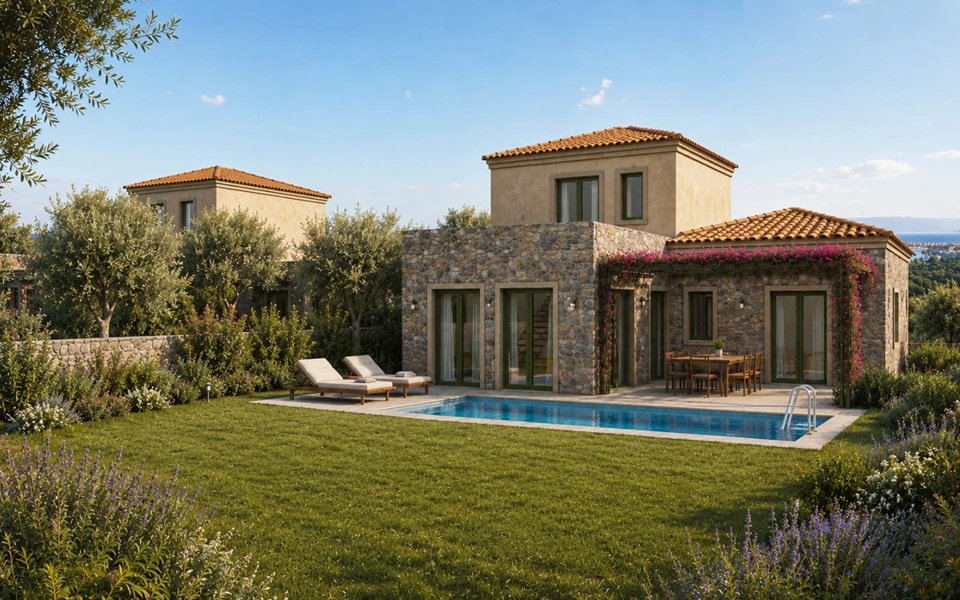
The upcoming fivefold increase in the house transfer tax (from 3% to 15%) will deal a blow to demand for holiday homes from citizens of non-EU countries, market agents have warned. The move does not address the housing shortage, they say, and comes amid increased demand by retirees for permanent residence. In addition, the audience for holiday homes has completely different characteristics and origins from those active in large urban centers, where the changes to the Golden Visa have also dramatically limited any speculative movements.
According to data from the company Elxis-At Home in Greece – which specializes in promoting holiday homes exclusively to buyers from abroad – in the 2024-2026 period, 20% of the purchases made concerned buyers from countries outside the EU, while at the same time 44% of the demand that was expressed came precisely from people from third countries (the remaining 56% concerned interested buyers from the EU).
According to George Gavriilidis, CEO of Elxis: “Regarding the purchasing public outside the European Union, our main markets are the UK (an increase of 20% from 2024 to 2026) and the US (an increase of approximately 30% from 2024 to 2026). Australia also doubled its share in a year and is now the third-largest market outside the EU, along with Switzerland and Israel, a country from which interest has decreased significantly compared to 2024.”
British buyers prefer the Ionian islands, at a rate of 24%. On the other hand, buyers from the US and Canada mainly turn to Crete (28%) and mainland Greece (25%), while for the Ionian the corresponding rate is only 12%. The Aegean attracts the same interest from both markets (UK and the US), with 19% in each.
“Interestingly, almost two in five interested parties from non-EU countries (38%) say they have a budget of over €400,000 available for the purchase of a holiday home in Greece. The corresponding rate of interested parties from countries within the EU is 24%. Therefore, people from third countries generally have a larger budget and often choose more expensive and better-quality homes,” says Gavriilidis.
Cre:Ekathiremini